Founder & Seipsum Origin
Seipsum emerged through long-term observation of cognition under real-world conditions.
Its development was shaped through practical execution of underlying Seipsum principles, independent cognitive study, and sustained exposure to heterogeneous environments.
The objective was never ideology or simplification, but structural clarity in relation to reality and complexity.
🔊 Every page can be listened to — press “Listen” on any section, or “Listen to whole page”.
The Founding Observation
Seipsum emerged from the persistent observation that cognition itself is the primary structure through which humans process reality, information, and complexity before any external system or technology.
Structural Thinking and Builder Orientation
The founder’s cognitive orientation was shaped from a young age through building, repairing, and structurally understanding how systems are assembled and maintained.
After high school, this developed into long-term practical work in the construction industry across multiple countries, continuing over approximately fifteen years.
This experience was not only occupational, but cognitive in nature.
Unlike abstract problem domains, construction provides immediate and irreversible feedback: structures either hold or fail, and solutions either function or require correction.
Over time, this reinforced a consistent cognitive pattern:
thinking in terms of structure, systems, dependencies, and functional integrity rather than isolated ideas.
This “builder mindset” became a foundational layer in how complexity is approached:
not as abstract information, but as something that can be structured, assembled, and stabilised.
This orientation later became a natural fit for the development of Seipsum, which operates on a similar principle:
real or perceived complexity is not reduced by simplification, but by restructuring cognition.
Building his own cognition became the founder's next building project.
This project was made possible by:
- learning lessons from his own life;
- applying the learned and improved lessons in daily life;
- working a full time job and listening to audiobooks at the same time;
- reading over 2250 books in over five and a half years—books of all genres, with a ratio of 5:1 nonfiction to fiction.
A consistent feature of the founder's cognitive development was the deliberate construction of an internal feedback loop: observing his own reasoning, evaluating its outcomes against reality, and adjusting its structure accordingly. This closed loop between thinking, observation, and correction became the operating mechanism through which metacognition stabilised into a reliable capacity.
Founder Cross-Domain Operational Development
Alongside construction work, the founder continuously moved across different operational domains over more than a decade in London.
These environments included:
- retail
- fine dining and silver service
- institutional hospitality environments (including Imperial College London)
- fitness and personal training
- sports massage therapy
- technical and electrical training
- construction and painting & decorating
- client-facing service systems
- independent work conducted through service platforms
Rather than remaining within a single professional identity, the trajectory consistently involved entering unfamiliar systems and environments, adapting to them, understanding and integrating new ways of thinking through practical engagement.
This created continuous exposure to:
- changing environments
- heterogeneous social systems
- operational complexity
- practical decision-making under uncertainty
- constantly changing contextual variables
- different models of organisation and value creation
Over time, this reinforced a broader systems-level observation:
Human cognition behaves differently depending on how perception, information, and situational variables are internally structured.
Over time, the founder developed the capacity to treat his own thinking as an object of analysis: to separate the content of thought from its structure, to identify where coherence broke down, and to restore stability through reorganisation. This capacity—metacognition in practical form—was built gradually, through sustained engagement with real problems rather than isolated exercises.
This practical exposure became one of the foundational observational environments behind Seipsum.
Founder — Independent Continuous Cognitive Development
Alongside practical operational work, the founder pursued long-term independent cognitive development.
Over five and a half years, more than 2250 books of all genres were studied, with a ratio of 5:1 nonfiction to fiction, selecting them to be read at random.
This process was not approached as passive information accumulation.
The focus progressively shifted toward:
- structural integration of ideas
- cross-domain pattern recognition
- systems-level reasoning
- abstraction transfer to different domains
- cognitive structure analysis
- understanding cognition itself as a trainable structure
This cognitive development occurred in parallel with practical work environments, creating a continuous interaction between theory, observation, implementation, and real-world constraints.
This created an unusual overlap between:
- operational reality
- practical execution
- continuous cognitive input
- long-term reflective integration
Over time, this reinforced a central conclusion:
human cognition appears significantly more adaptable and structurally trainable than most systems currently assume.
This progression also reflected a broader financial trajectory in which professional value increased significantly over time through improved cognitive structuring and decision-making, rather than industry change alone.
Through long-term self-directed learning, strategic adaptation, and progressive understanding of value creation, the founder gradually increased execution quality, service reliability, and professional positioning across different work systems.
The founder’s cognitive trajectory illustrates how general cognition—the ability to process, differentiate, and stabilise information—can evolve into metacognition: the structural observation of one’s own thinking. This development was not accidental, but the direct result of applying Seipsum’s framework to one’s own cognitive challenges over time.
Ready to restructure your thinking? Contact us to start.
Save Time | Gain Value | Structure Cognition
Seipsum — Practical & Theoretical Validation
The principles behind Seipsum were not developed exclusively through theoretical reflection.
They emerged through iterative self-application, practical observation, operational testing, and continuous exposure to operational feedback loops.
The founder became the first practical proof-of-concept for many of the underlying principles behind Seipsum.
Over time, sustained engagement with increasingly complex environments appeared to correlate with improvements in:
- structural reasoning
- differentiation capacity
- clarity under uncertainty
- decision stability
- contextual integration
- adaptive thinking across different contexts
This process occurred gradually through years of practical engagement rather than isolated theoretical study.
The development of Seipsum later extended beyond self-application.
Rather than depending primarily on formal status or institutional pathways, progress emerged through:
- clearer understanding of value creation
- improved strategic decision-making
- adaptive communication
- better understanding of client perception
- increased implementation precision
- long-term consistency under real-world constraints
This reinforced another central observation behind Seipsum:
Cognition does not only influence thinking — it influences how effectively individuals interact with real-world systems and constraints.
Through years of self-application, the founder’s cognitive development transitioned from structural reasoning to metacognitive awareness—the ability to recognise patterns in one’s own thinking, identify inefficiencies, and actively restructure them. This evolution was not an endpoint, but a continuous feedback loop between practice and observation.
The progression occurred in recognisable layers. First, general cognition strengthened: processing, differentiating, and stabilising information with increasing precision. Only on top of this foundation did a second layer emerge—the ability to observe that processing itself, to notice not only what was being thought, but how. This second layer is what is understood here as metacognition.
Read more about: Founder — External Experience.
Read more about: Seipsum Origin.
Founder — External Operational Validation
Across years of independent platform-based work in London, continuous client feedback created external validation loops under highly variable real-world conditions.
This included:
- 171 in total, verified client reviews; of which 159 five-star reviews for services well-delivered
- 256+ completed tasks
- 4.8/5 average long-term rating
- Elite Tasker status maintained across most of the active period on the platform
The feedback received consistently reflected themes such as:
- reliability and consistency
- quality of execution
- communication clarity
- adaptability under changing conditions
- trust and repeated engagement
Rather than being interpreted as isolated praise, this feedback is understood as distributed evaluation of cognition under dynamic environments.
Within the context of Seipsum, it represents continuous real-world evaluation of execution quality, adaptability, communication, reliability, and structured problem-solving under heterogeneous conditions.
A consistent feature of the founder's cognitive development and professional execution, was the deliberate construction of an internal feedback loop: observing his own reasoning, evaluating its outcomes against reality, and adjusting its structure accordingly. This closed loop between thinking, observation, and correction became the operating mechanism through which metacognition stabilised into a reliable capacity.
Read more about: Founder Reviews | In Depth.
Read more about: Founder — External Experience.
Founder Reviews
What people say about the founder:
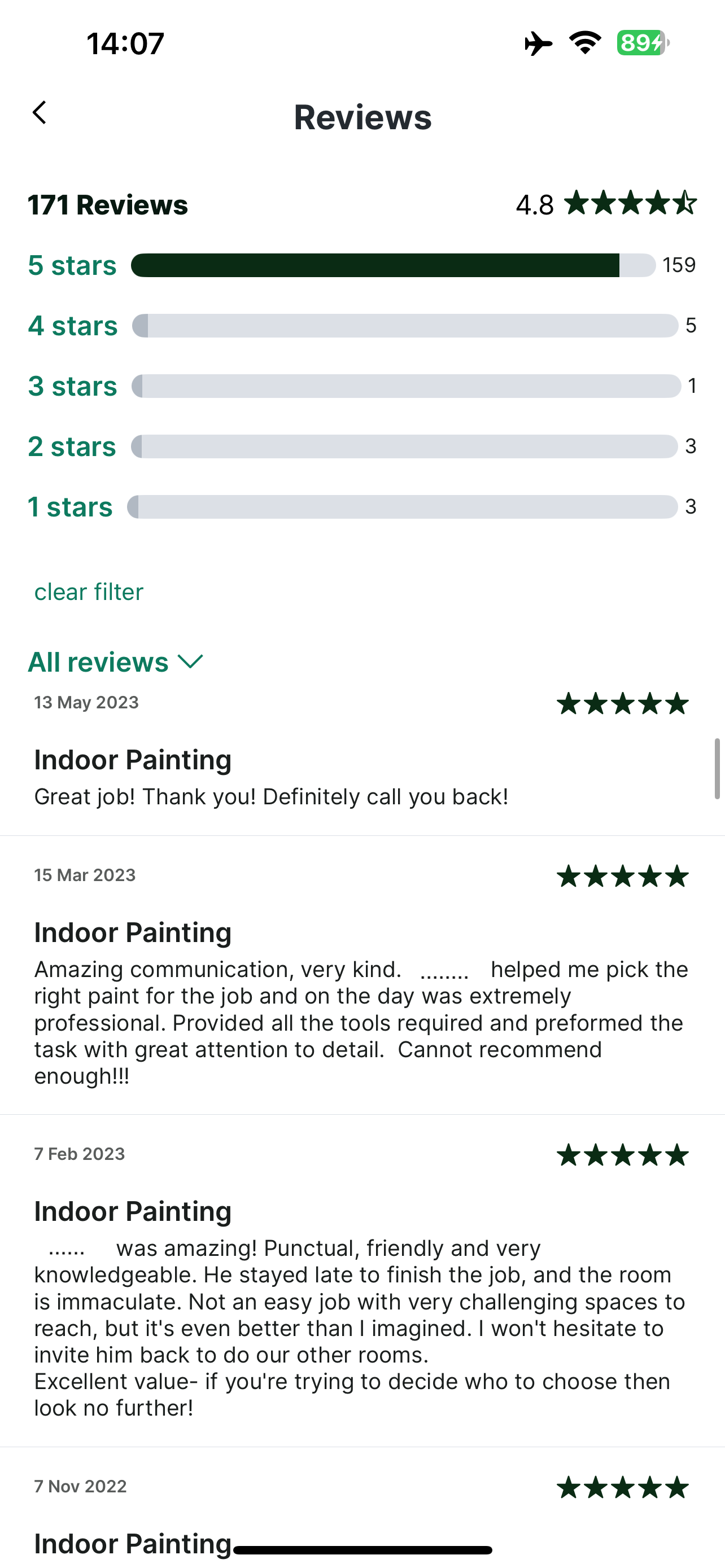
Indoor Painting Great job! Thank you! Definitely call you back!
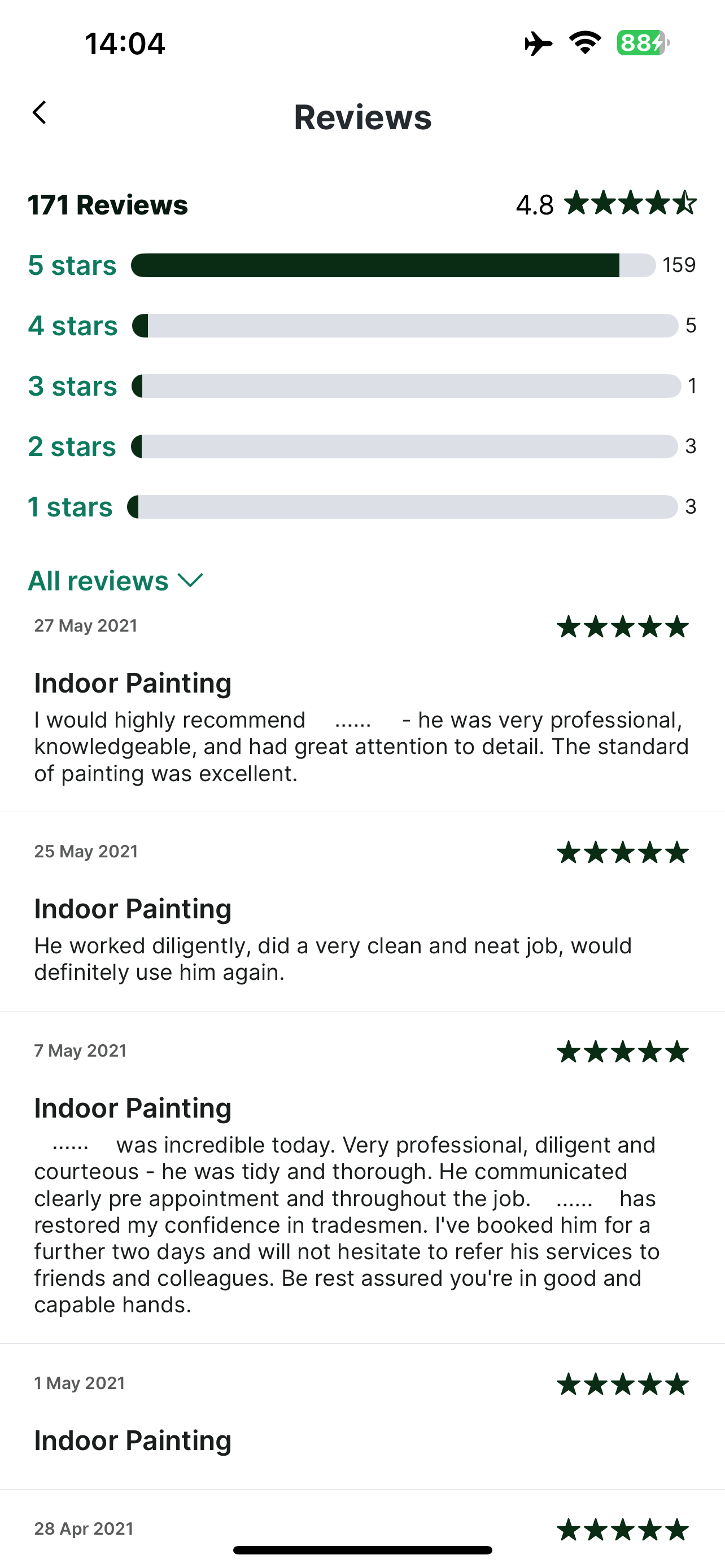
Indoor Painting Amazing communication, very kind. .... helped me pick the right paint for the job and on the day was extremely professional. Provided all the tools required and preformed the task with great attention to detail. Cannot recommend enough!!!
Indoor Painting ...... was amazing! Punctual, friendly and very knowledgeable. He stayed late to finish the job, and the room is immaculate. Not an easy job with very challenging spaces to reach, but it's even better than I imagined. I won't hesitate to invite him back to do our other rooms. Excellent value- if you're trying to decide who to choose then look no further!
Indoor Painting I would highly recommend ...... - he was very professional, knowledgeable, and had great attention to detail. The standard of painting was excellent.
Indoor Painting He worked diligently, did a very clean and neat job, would definitely use him again.
Indoor Painting ..... was incredible today. Very professional, diligent and courteous - he was tidy and thorough. He communicated clearly pre appointment and throughout the job. ..... has restored my confidence in tradesmen. I've booked him for a further two days and will not hesitate to refer his services to friends and colleagues. Be rest assured you're in good and capable hands.
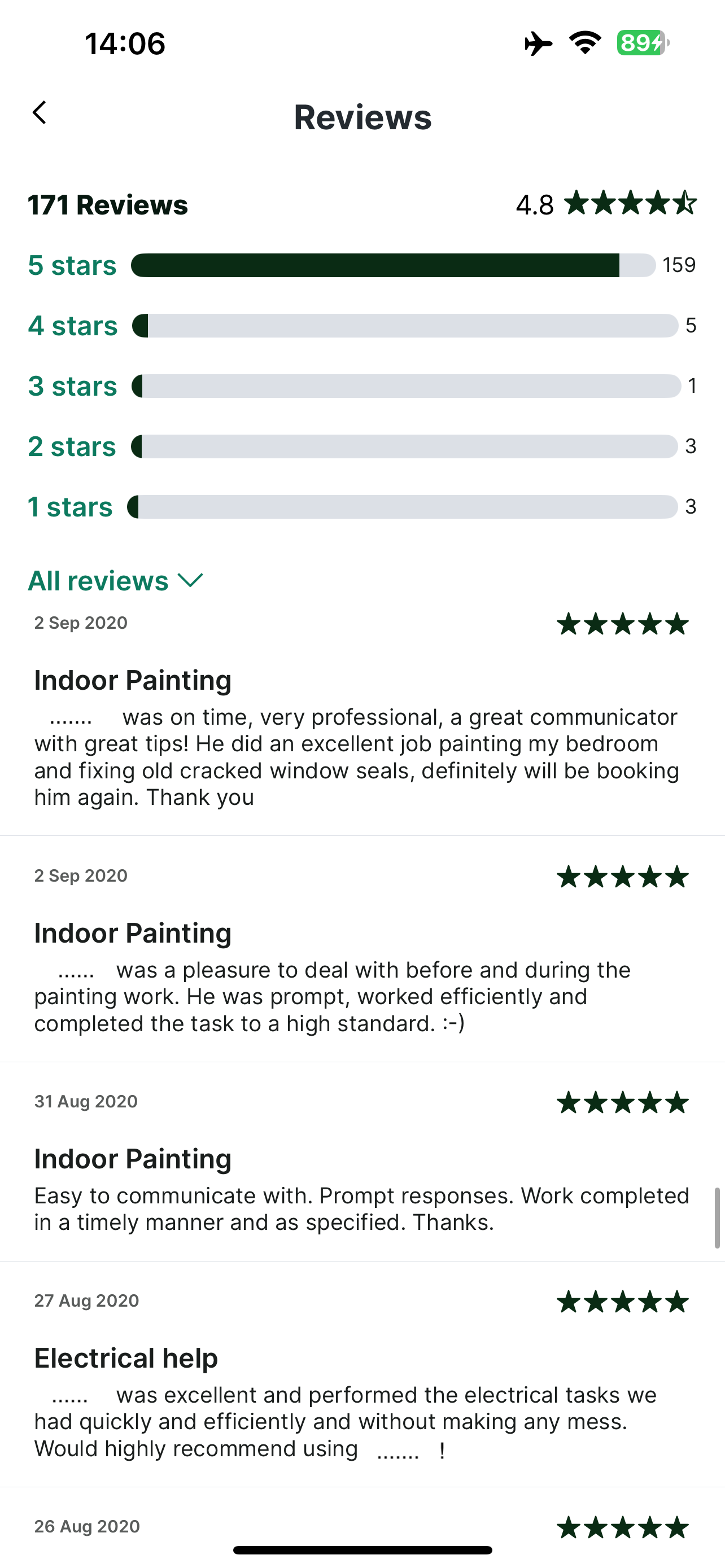
Indoor Painting ..... , was on time, very professional, a great communicator with great tips! He did an excellent job painting my bedroom and fixing old cracked window seals, definitely will be booking him again. Thank you
Indoor Painting ..... was a pleasure to deal with before and during the painting work. He was prompt, worked efficiently and completed the task to a high standard. :-)
Indoor Painting Easy to communicate with. Prompt responses. Work completed in a timely manner and as specified. Thanks.
Electric Help ..... was excellent and performed the electrical tasks we had quickly and efficiently and without making any mess. Would highly recommend using ..... !

Indoor Painting Efficient and friendly; ..... does great quality work and leaves the place tidy which is more than a lot of tradespeople do! I would definitely recommend and hire again :)
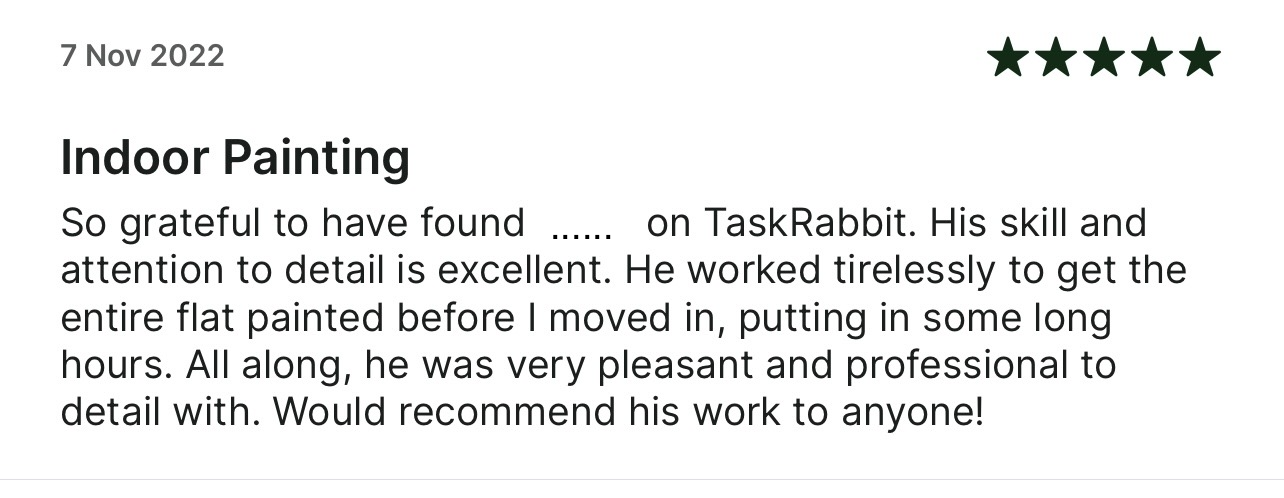
Indoor Painting So grateful to have found ...... on TaskRabbit. His skill and attention to detail is excellent. He worked tirelessly to get the entire flat painted before I moved in, putting in some long hours. All along, he was very pleasant and professional to detail with. Would recommend his work to anyone!
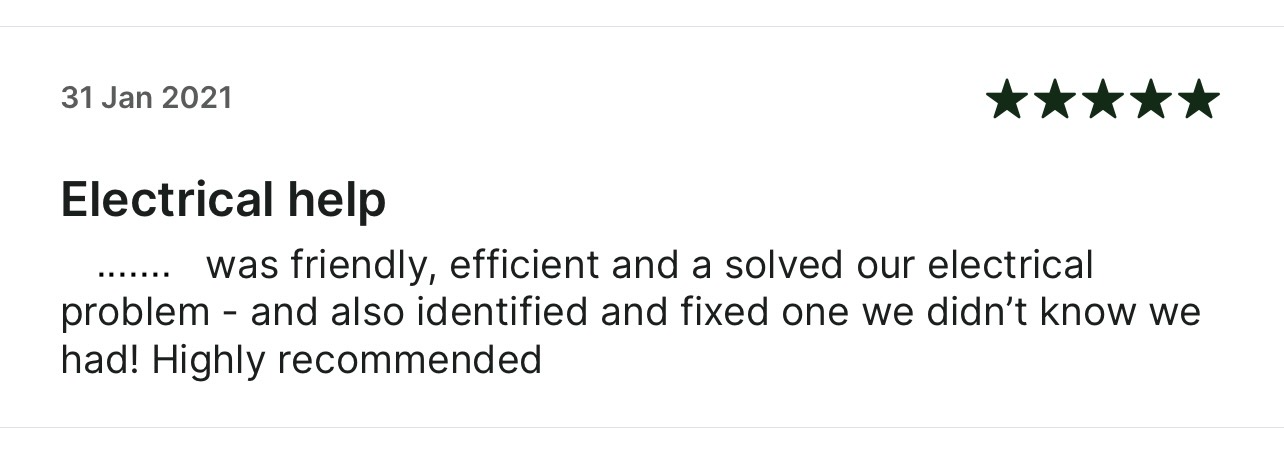
Electric Help ..... was friendly, efficient and a solved our electrical problem - and also identified and fixed one we didn't know we had! Highly recommended

Indoor Painting This is the second time we've had ..... to the house. He does a great job and has managed to fix a total disaster.

Indoor Painting Best painter I have had the pleasure of hiring I would recommend him 100%
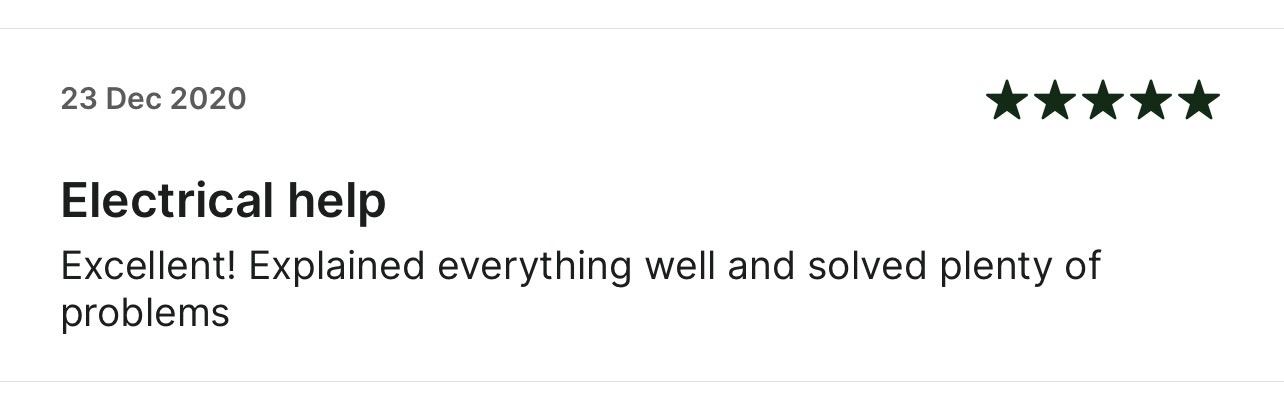
Electric Help Excellent! Explained everything well and solved plenty of problems
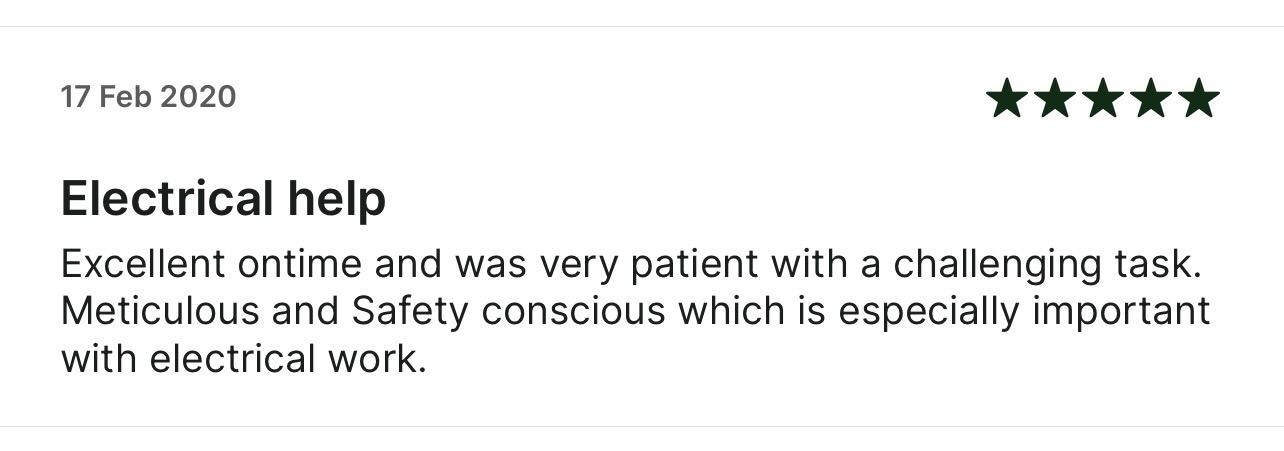
Electric Help Excellent ontime and was very patient with a challenging task. Meticulous and Safety conscious which is especially important with electrical work.

Indoor Painting Just a fantastic job. Worked from 9am to till late in the night to get the job done. Precise perfectionist who clearly listened to instructions. He has transformed our entire house. Thanks sooo much ..... !
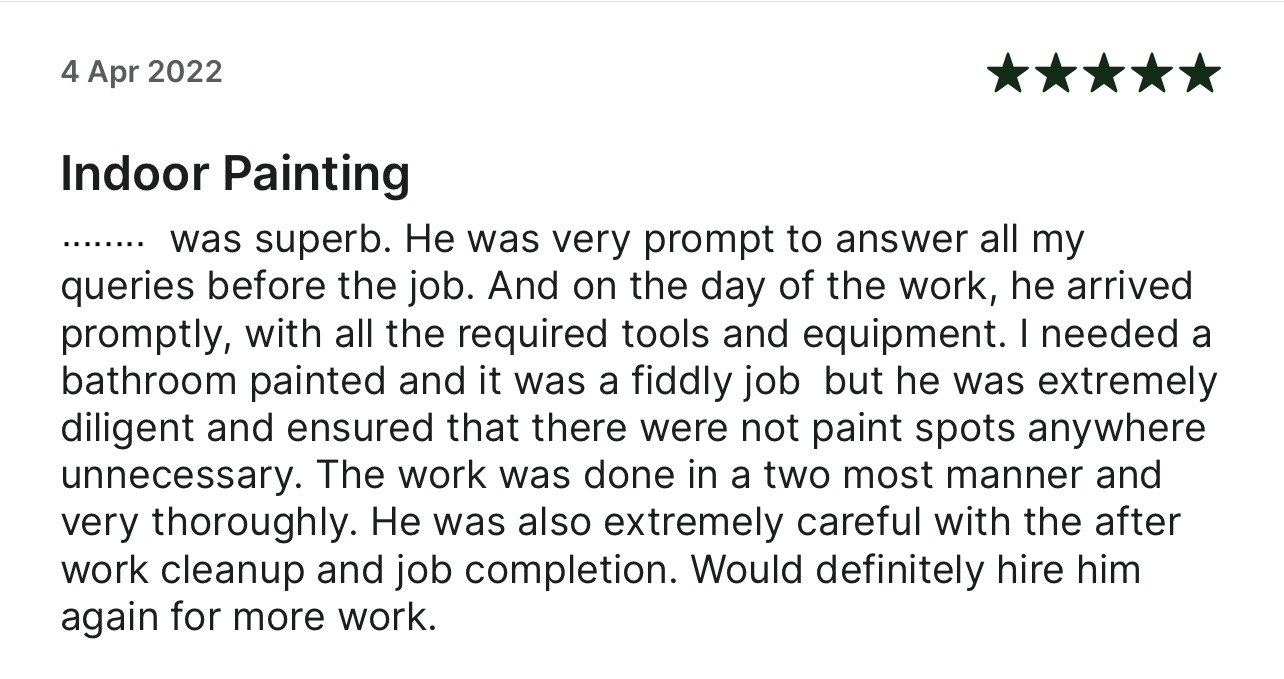
Indoor Painting ..... was superb. He was very prompt to answer all my queries before the job. And on the day of the work, he arrived promptly, with all the required tools and equipment. I needed a bathroom painted and it was a fiddly job but he was extremely diligent and ensured that there were not paint spots anywhere unnecessary. The work was done in a two most manner and very thoroughly. He was also extremely careful with the after work cleanup and job completion. Would definitely hire him again for more work.

Indoor Painting ..... did a fantastic job painting 4 rooms on time and at an exceptional high standard. Thank you for your hard working effort, upmost high quality finish. Really good paint knowledge and happy to explain the process to completion. We are really please with our newly painted rooms. Thank you again. Highly recommend.

Indoor Painting ..... was very professional and quick. He took care of all the things I needed and was also very careful with keeping distance / wearing a mask due to covid. Highly recommended

Indoor Painting ..... was very thorough in his work and patient with us, also helping us to chose the best paint colours for our walls and woodwork - thank you!
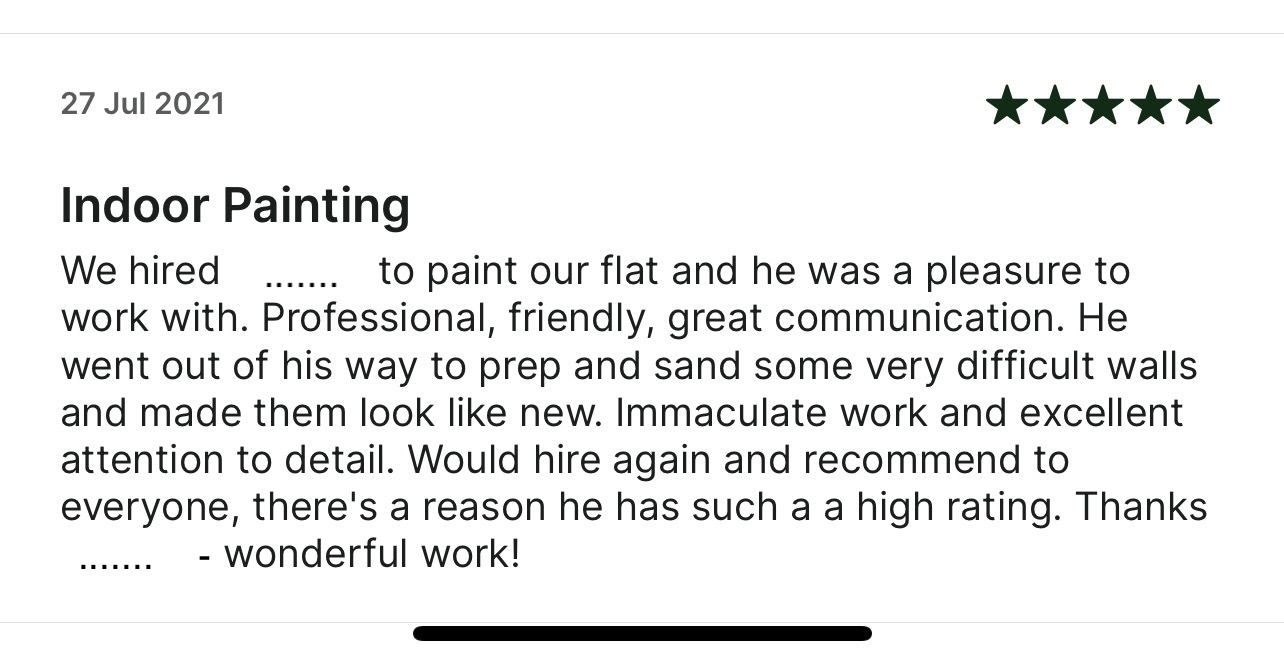
Indoor Painting We hired ..... to paint our flat and he was a pleasure to work with. Professional, friendly, great communication. He went out of his way to prep and sand some very difficult walls and made them look like new. Immaculate work and excellent attention to detail. Would hire again and recommend to everyone, there's a reason he has such a a high rating. Thanks ..... - wonderful work!
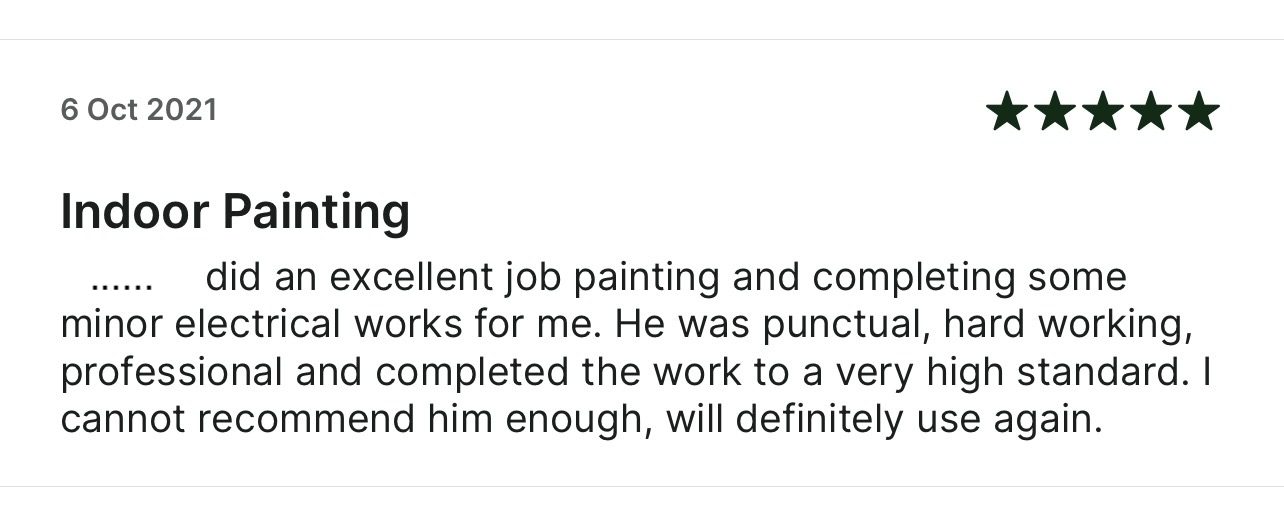
Indoor Painting ..... did an excellent job painting and completing some minor electrical works for me. He was punctual, hard working, professional and completed the work to a very high standard. I cannot recommend him enough, will definitely use again.
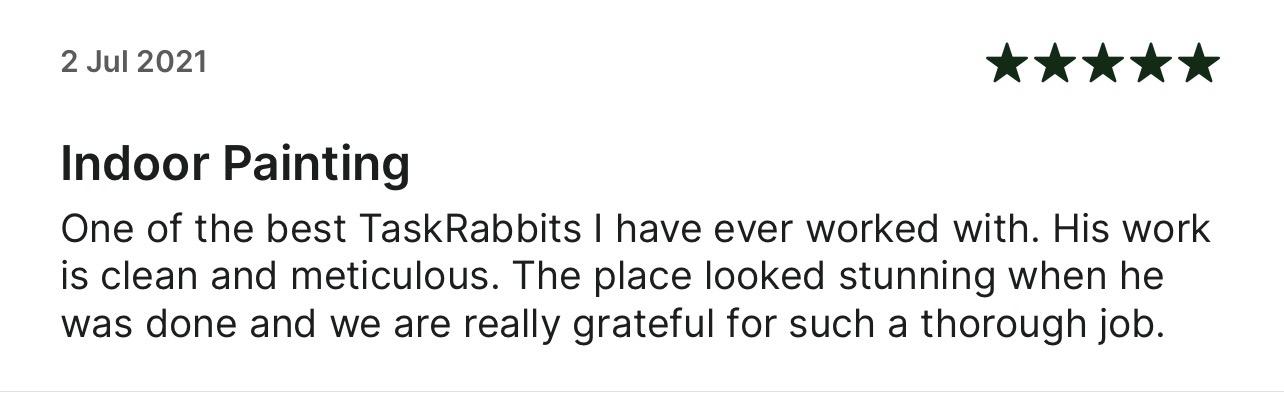
Indoor Painting One of the best TaskRabbits I have ever worked with. His work is clean and meticulous. The place looked stunning when he was done and we are really grateful for such a thorough job.

Indoor Painting ..... did an amazing band very thorough job! He is very knowledgeable about all aspects of decorating and was very professional! Work done to high standard, really impressive!
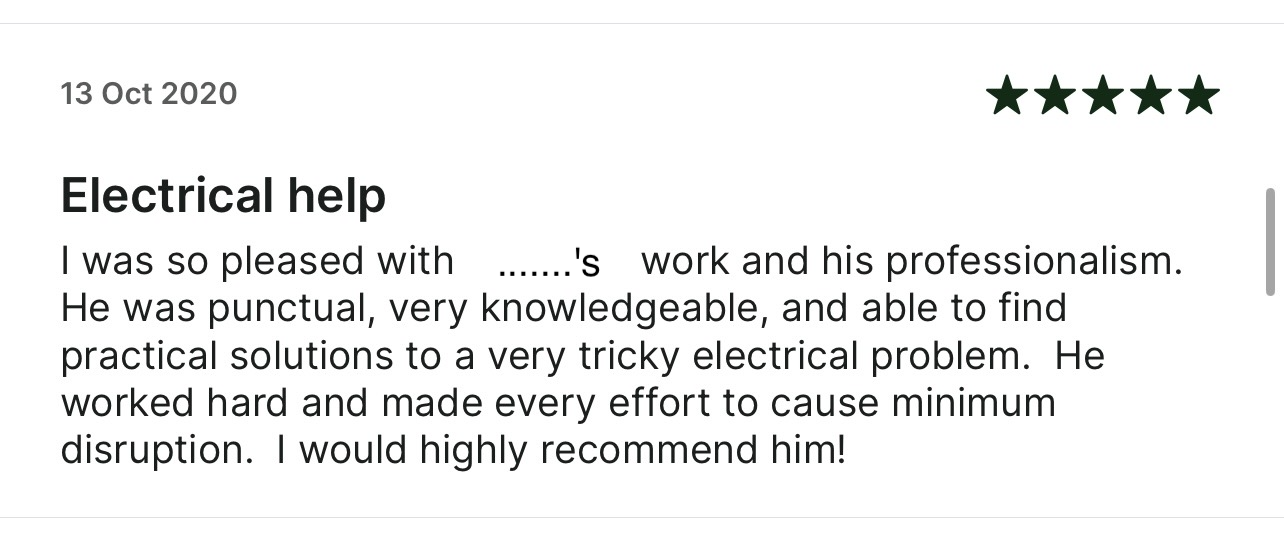
Electrical Help I was so pleased with .....'s work and his professionalism. He was punctual, very knowledgeable, and able to find practical solutions to a very tricky electrical problem. He worked hard and made every effort to cause minimum disruption. I would highly recommend him!

Indoor Painting ..... was punctual and very professional. He is a perfectionist with his painting and I am incredibly happy with my freshly painted rooms .Would definitely use him again
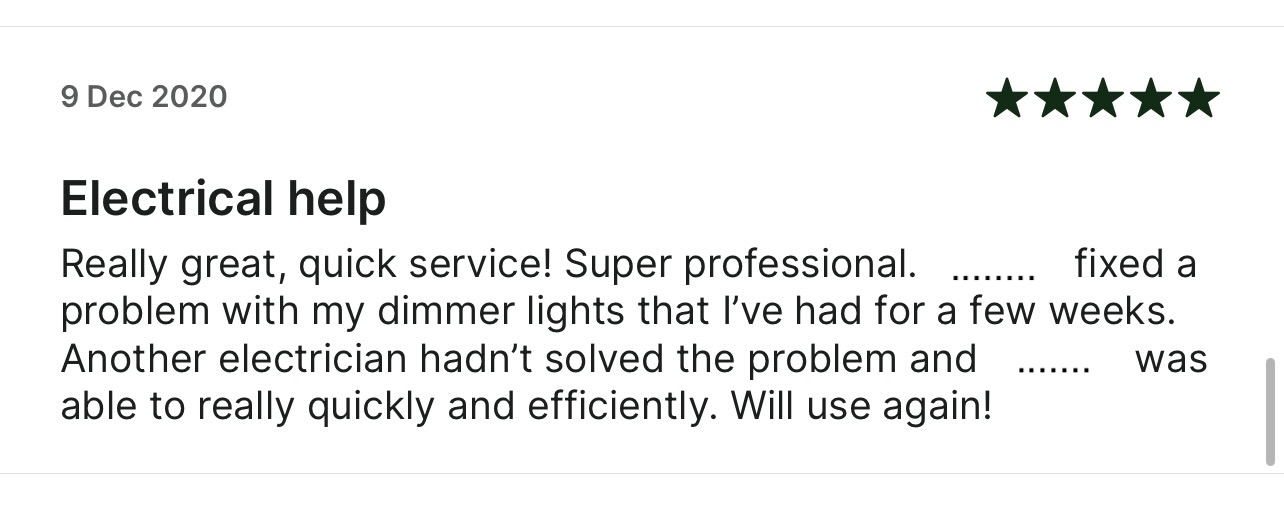
Electrical Help Really great, quick service! Super professional. ..... problem with my dimmer lights that I've had for a few weeks. Another electrician hadn't solved the problem and ..... was able to really quickly and efficiently. Will use again!

Electrical Help Great work! Solid expertise, strongly recommended. Thank you ..... !
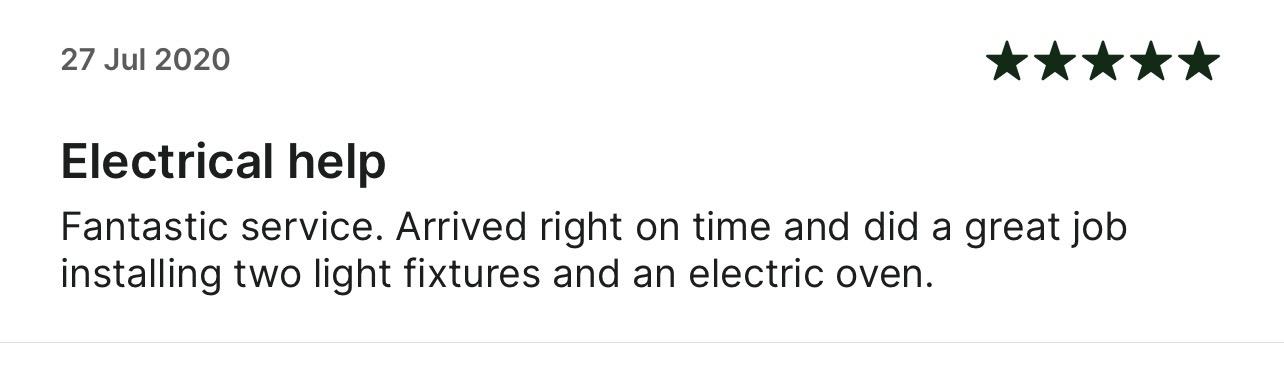
Electrical Help Fantastic service. Arrived right on time and did a great job installing two light fixtures and an electric oven.
Read more about: Founder Reviews | In Short.
Read more about: Seipsum — Practical & Theoretical Validation.
Read more about: Founder — External Experience.
Ready to restructure your thinking? Contact us to start.
Save Time | Gain Value | Structure Cognition
The AI Era and Human Cognition
Modern systems increasingly amplify informational complexity, often intensifying existing informational chaos.
This dynamic is important because many modern systems increasingly operate through informational compression into simplified narratives, fixed positions, or emotionally stabilising interpretations.
This creates a growing divergence:
technology expands rapidly while baseline cognition often remains structurally underdeveloped relative to the environments it must navigate.
As a result:
- more information can produce less clarity
- more AI can amplify confusion
- more analysis can destabilise decisions
- more input can increase fragmentation
Increased information does not reduce the need for cognition to be developed independently.
Read more about: Human Cognition & AI.
Practical Observation of AI Systems and Human Cognition
The founder has engaged with publicly available AI systems since their early commercial deployment, using them continuously across different contexts of work, learning, and problem-solving.
Over time, repeated interaction revealed a consistent experiential pattern in how these systems respond to input.
The same AI systems would produce significantly different outcomes depending not on the tool itself, but on how the founder structured thinking when interacting with them.
In practical use, clearer cognitive structuring tended to produce more coherent and usable outputs, while fragmented or contradictory input patterns often resulted in less stable responses.
This was observed repeatedly across the past four years of use of the same AI systems.
Across this time it became apparent to the founder that different individuals could achieve very different levels of clarity using identical AI tools.
This reinforced a practical distinction between the capabilities of the system as an external tool and the structure of cognition interacting with it as an internal engine.
Read more about: Human Cognition & AI.
Cognitive Trainability
One of the central observations behind Seipsum is that cognition itself may be significantly more capable than commonly assumed.
The founder became the first long-term practical application of many of the principles that later contributed to Seipsum.
Over time, sustained engagement with complexity, structural thinking, and cognitive integration appeared to produce broad changes in:
- perception and differentiation
- cognitive stability
- general intuition
- awareness of structural relationships
These experiential observations later extended beyond self-application.
Early direct application of structured cognitive engagement with another individual also suggested that baseline cognition may be more adaptable than generally assumed.
The founder’s cognitive trajectory illustrates how general cognition—the ability to process, differentiate, and stabilize information—can evolve into metacognition: the structural observation of one’s own thinking. This development was not accidental, but the direct result of applying Seipsum’s framework to one’s own cognitive challenges over time.
Observed changes included improvements in:
- reflective clarity
- intuition capacity
- internal cognitive organisation
- situational awareness
- differentiation between cognitive layers
- stability of thinking under complexity
These observations reinforced the broader foundational hypothesis behind Seipsum:
Cognition may be structurally improvable through sustained engagement with organised complexity.
Seipsum Is Not an Ideology
Seipsum is not built as a belief system, philosophical doctrine, motivational framework, or ideological structure.
It does not attempt to impose fixed interpretations of reality, prescribe identity, or define universal conclusions about how individuals should think.
The focus of Seipsum is structural rather than ideological.
It operates through clarification of cognitive layers, differentiation of variables, reduction of cognitive noise, and improvement of structural coherence in cognition.
For this reason, Seipsum does not require ideological alignment, identity affiliation, or adherence to predefined conclusions.
Read more about: FAQ
Closing Perspective
Seipsum is built on a foundational assumption:
Human cognition is more adaptable, trainable, and structurally improvable than previously thought.
The purpose of Seipsum is to explore this possibility through practical, structural, and operational engagement.
Within Seipsum, complexity is understood as the condition in which interacting elements exceed the structuring capacity of cognition in scale or depth.
Cognition is treated as a broader structural phenomenon that is not fundamentally confined to gender, identity, or even the human species alone.
Ready to restructure your thinking? Contact us to start.
Save Time | Gain Value | Structure Cognition
Seipsum — Cognitive Services
To learn more about Seipsum's Cognitive Structuring Services, please visit the services section.
Contact / Resonance Form
If Seipsum's perspective resonates with you and you would like to discuss how our services can support your goals, please visit the contact form section.
Contact / Access
For access to Structured Cognitive Services, please write to:
Seipsum was built in collaboration with The Tinkerer-Thinker